Spiral Drop
- 4.5
- Rating
- 1.00M
- Installs
- Free
- Price

 Analysis by App-foxy
Spiral Drop is the kind of action game I open when I want something immediate rather than a long campaign or a complicated ruleset. Its central idea is simple: survive the drop through a spiral path, react to what appears below, and try to keep the run alive. That simplicity makes the first minute easy to understand, but it does not make every attempt easy. The challenge comes from turning quick reactions into consistent timing.
I found the game most appealing in short sessions. It fits the moments when I have a few minutes while waiting for an appointment, taking a break, or winding down before bed. There is no need to learn a large cast of characters, study a map, or remember a long sequence of objectives. You start, focus on the descent, and learn from the mistake that ended the previous attempt.
Gimica GmbH presents it as a free action game for a broad audience, with an Everyone age rating. It has reached over a million installs and holds a 4.6 average from around forty-four thousand ratings, which matches my impression that the basic concept is easy for many players to pick up. The game is free to download, while optional in-app purchases range from $0.99 to $4.49 per item.
You May Also Like

 Blood Strike: 2.5 Anniversary
Blood Strike’s Loadouts Turn Every Drop Into a Tactical Gamble
A close look at Blood Strike’s custom loadouts: how fast access to signature weapons reshapes its battle royale rhythm, rewards preparation, and narrows the gap between fights.

 Pandora - Music & Podcasts
Pandora’s Music Is Easy to Start, but Harder to Recover
Pandora’s strength is its low-effort path from a seed to a station. Its weak spot is how much confidence it asks you to place in connection, setup, and quiet recovery.

 8 Ball Pool
 Is Built on Rivalries, Rematches, and Routine
A close look at the rivalries, rematches, shared routines, and unanswered safety questions that turn a quick pool match into a persistent mobile community.

 Samsung Music
’s Quiet Strength Is Playing What You Already Own
Its reach comes less from spectacle than from dependable access to a personal library. That simplicity is both the app’s strongest retention engine and its ceiling.

 AccuWeather: Weather Radar
AccuWeather Review: A Quick, Clear Forecast for Everyday Decisions
For everyday plans, the best forecast is the one you can understand quickly. AccuWeather makes rain timing, radar, and local conditions easy to act on, with a few trade-offs.

 Hill Climb Racing
Why Hill Climb Racing Still Turns Crashes Into One More Run
A tiny car, a bumpy hill and one more upgrade: Hill Climb Racing keeps resurfacing because its simple chaos makes every near-miss feel personal.
More From Our News Desk
View All News


Starting a first run without overthinking it
I use the first run to learn the screen’s rhythm, not to prove anything. In this section, I’ll focus on choosing one clear target and noticing what the spiral is asking me to do, so the opening feels like a manageable lesson rather than a test. That makes it easier to spot the small decision that leads to a first clean stretch.
What to expect when you open it
The first thing I would tell a new player is not to treat the opening attempt as a test of skill. It is better understood as a quick lesson in the game’s rhythm. The spiral layout gives you a clear visual target, but the descent asks you to make decisions before you have fully settled into the timing. My first few attempts were more about discovering how quickly I needed to respond than about chasing a good result.
That learning curve is useful because the game communicates its main idea through play rather than a long explanation. You see the route, begin moving through it, and quickly understand that careless timing ends a run. The action is direct, so the important adjustment is mental: stop trying to react to every detail at the last possible moment and start watching the next safe opening.
For a first-time player, the most reassuring part is that failure is easy to interpret. When a run ends, I usually know whether I hesitated, committed too early, or focused on the wrong section of the spiral. That clarity makes another attempt feel worthwhile instead of random. A game that hides the reason for failure can become frustrating quickly; here, the compact structure encourages experimentation.
The main trade-off is that the same simplicity can feel narrow if you expect a large action game. This is not the right choice for someone looking for a story, team-based play, deep equipment management, or a huge collection of modes. Its value is concentrated in the repeated descent and the satisfaction of improving your control over it.
Getting comfortable with the first successful action
I recommend beginning with a deliberately cautious run. Rather than trying to move as fast as possible, I watch the next part of the spiral and make one controlled decision at a time. The first meaningful success is not necessarily a spectacular score; it is completing a section that previously caused a mistake. That small target gives the game a useful sense of progress even when a full run is still out of reach.
A practical technique is to keep your attention slightly ahead of the immediate position. If I stare only at the point directly beneath the falling path, I tend to react late. Looking toward the next opening gives me time to prepare instead of panic. This is a small change, but it is one of the most useful habits I found because the spiral can make the screen feel busier than the actual decision required.
Another helpful approach is to separate movement from emotion. After a near miss, my instinct is to rush the next choice and recover immediately. That usually makes the following decision worse. Pausing mentally for a fraction of a second and identifying the next safe route works better than trying to compensate with speed. The game rewards composure more than dramatic last-second corrections.
For everyday use, I would play in short groups of attempts rather than treating every session as an endless challenge. Three or four focused runs are enough to notice whether a technique is helping. If I continue after my attention has gone, I stop learning and begin repeating the same mistake. This is especially important on a phone, where interruptions and tired hands can make a fair challenge feel harsher than it really is.
What can be confusing during the opening minutes
The spiral perspective may initially make distance difficult to judge. A section that looks close can arrive sooner than expected, while a wider-looking gap may require more careful positioning. I found it helpful to judge the route by its upcoming shape rather than by how large an opening appears on the screen. With a few attempts, the visual pattern becomes easier to read.
New players may also assume that every decision must be made instantly. In practice, the better question is often which choice leaves the most room for the next one. A route that looks slightly slower can be safer if it keeps the following section readable. This is an important trade-off: chasing the quickest-looking opening can produce a shorter run than choosing a less dramatic but more manageable path.
Another source of confusion is the difference between understanding the route and executing it. I sometimes knew what I wanted to do but moved too late because I was watching the wrong point. When that happens, I do not change my entire strategy. I focus on the timing of that one transition and repeat it until the movement feels familiar. That turns a vague problem into a specific practice goal.
The game is also better suited to players who enjoy repetition than to those who need constant novelty. Its appeal comes from refining a compact skill. If you like restarting after a mistake and immediately trying a slightly better approach, the structure is satisfying. If repeated attempts feel like doing the same task again, the limited scope may become tiring sooner.
How I would approach the next step
Once the basic descent feels comfortable, I would stop measuring progress only by how far a single run goes. Instead, I would look for consistency. Can I pass the opening section several times? Can I reach a difficult turn without rushing? Can I recover after an imperfect move? These questions reveal improvement more accurately than one lucky attempt.
A useful personal routine is to identify one trouble spot per session. I replay the game with that section in mind, then judge whether my timing becomes more reliable. This makes the short-session format work in your favor. You do not need a long uninterrupted block to improve; you need a clear observation and a willingness to test it.
I also suggest avoiding purchases until you know whether the core loop suits you. Because the game is free, you can experience the main style of play without committing money. Optional items cost between $0.99 and $4.49 each, so a cautious player can decide based on actual enjoyment rather than curiosity at the start. For me, the best reason to spend would be convenience or personal support for the game, not an assumption that payment will replace practice.
The current version is 1.15.1, and the game supports devices running Android 7.0 or later. That makes it accessible to people using older compatible Android phones, although the experience will still depend on how comfortable the display and controls feel on a particular device. I prefer testing a few runs before deciding whether the screen gives me enough room to read the spiral clearly.
Where it fits beside other action games
Compared with a conventional action game, Spiral Drop removes much of the surrounding structure. There are no long missions for me to track, no complicated loadout to optimize, and no extended story sequence competing with the central challenge. That makes it easier to start than many action titles, especially when I want a quick mental reset.
Compared with an endless runner, its identity feels more focused on reading the descent and managing timing around the spiral. Traditional runners often emphasize horizontal movement, lane changes, or collecting objects while the scenery moves continuously. Here, the visual structure makes route judgment the main concern. Players who enjoy spatial puzzles hidden inside action may appreciate that difference.
On the other hand, a larger action game is a better choice when I want variety, character development, or a stronger sense of long-term progression. A puzzle game may also be preferable if I want unlimited time to consider each move. Spiral Drop sits between those experiences: it asks for attention and quick decisions, but keeps the rules compact enough to understand during a short break.
That comparison also explains who should skip it. I would not recommend it to someone who dislikes restarting, becomes frustrated by timing-based failure, or expects every session to introduce a new mechanic. I would recommend it to players who enjoy chasing personal improvement, learning visual patterns, and turning a simple control idea into a reliable skill.
Small habits that make the game feel fairer
The first habit is to play with a stable grip. I noticed that hurried finger movement can make a manageable decision feel uncontrolled, especially when I am holding the phone awkwardly. Keeping the device steady and using the same hand position from attempt to attempt makes it easier to tell whether a mistake came from timing or from my physical setup.
The second is to treat the opening as a calibration period. I use the early portion of a run to settle into the pace instead of spending all my attention on the final result. If the first few decisions feel rushed, I adjust my focus before reaching the more demanding sections. This prevents one early mistake from turning into a chain of increasingly hurried choices.
The third is to stop after a clear improvement. It is tempting to continue until I beat the best result of the day, but ending after successfully handling a troublesome transition leaves me with a useful reference for the next session. That approach is especially effective for a game built around repeated attempts because it preserves the feeling of progress rather than turning play into a contest against fatigue.
There is also a practical reason to keep expectations realistic. A free action game with optional purchases may appeal to a wide audience, but no purchase can guarantee that the timing will suit you. I would first decide whether the basic descent feels enjoyable, then consider whether any optional item adds value for the way I personally play. That order keeps the decision simple and avoids confusing spending with skill.
My recommendation for a first-time player
My advice is to install it, begin with a handful of relaxed attempts, and judge the game by how much you enjoy learning from failure. Do not worry about producing an impressive first result. Focus on recognizing the spiral, anticipating the next opening, and finishing one section more cleanly than before. That is the point at which the game starts to make sense.
For me, the strongest use case is a short, focused break. I can play without preparing a long session, and I can stop after a few attempts without feeling that I abandoned a complicated objective. The weakness is equally clear: players who need deep content or continuous variety may find the loop too restrained. Its appeal depends on whether repetition feels like practice or monotony.
Gimica GmbH has built a compact action experience around one readable idea, and the broad rating response suggests that the format connects with many players. I would describe it as approachable rather than effortless. The controls and goal are easy to grasp, but getting consistent results asks for patience, visual attention, and better timing than the first run may suggest.
My final recommendation is to try Spiral Drop when you want a free action game for brief sessions and enjoy improving through repetition. It is not a replacement for a full-scale adventure or a feature-heavy action title, but it does not need to be. When I want a focused challenge that starts quickly and gives me a clear reason to try again, this spiral descent earns a place on my phone. Its best moment is the first time a section that once felt chaotic becomes predictable because I learned how to read it.
FAQs for Spiral Drop
01What is Spiral Drop and how does it work?
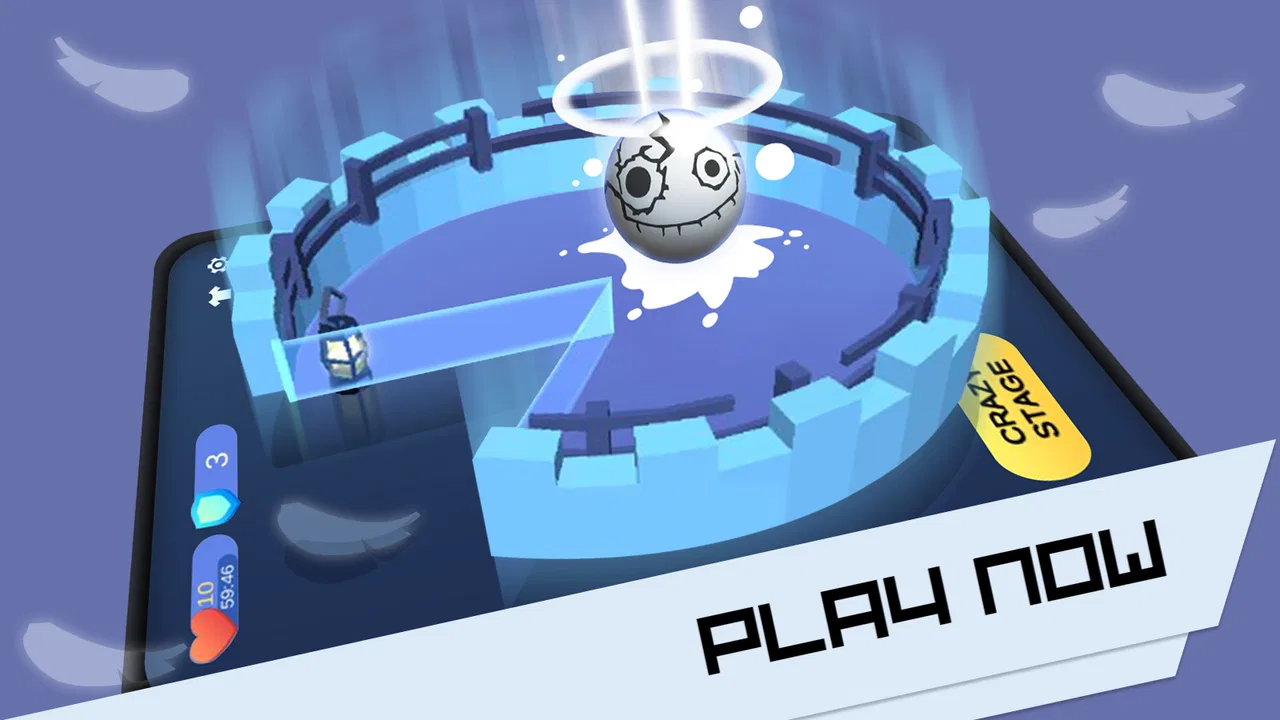
Spiral Drop is an addictive puzzle game available for both Android and iOS devices. Players guide a ball through a spiraling tower by tapping to rotate the structure, avoiding obstacles along the way. The game combines strategy and reflexes, offering various levels with increasing difficulty to keep players engaged.
02Is Spiral Drop free to download and play?
Yes, Spiral Drop is free to download and play, but it contains in-app purchases. While the basic game is accessible without cost, players have the option to purchase additional features or power-ups to enhance their gameplay experience. These purchases are entirely optional and not necessary to enjoy the game.
03What are the main features of Spiral Drop?
Spiral Drop features vibrant graphics, smooth gameplay mechanics, and a variety of levels that challenge players’ skills. The game includes daily challenges, leaderboards to compete with friends, and customizable skins for the ball. These features make Spiral Drop an engaging and dynamic experience for puzzle enthusiasts.
04Does Spiral Drop require an internet connection to play?
Spiral Drop can be played offline, making it ideal for on-the-go gaming without the need for a constant internet connection. However, some features, such as leaderboards and daily challenges, may require an internet connection to update scores and access new content.
05Are there any ads in Spiral Drop, and can they be removed?
Spiral Drop includes ads that appear occasionally during gameplay. Players can choose to remove ads by making a one-time purchase within the app. This option provides an uninterrupted gaming experience, allowing players to focus on progressing through the levels without distractions.
Pros
- Engaging gameplay with intuitive controls.
- Visually appealing with vibrant graphics.
- Offers challenging levels for all ages.
- Smooth performance with minimal lag.
- Frequent updates with new content.
Cons
- Contains in-app purchases that can add up.
- Ads can be intrusive during gameplay.
- Limited offline functionality.
- Initial levels may feel too easy.
- Music can become repetitive over time.

Spiral Drop
Gallery